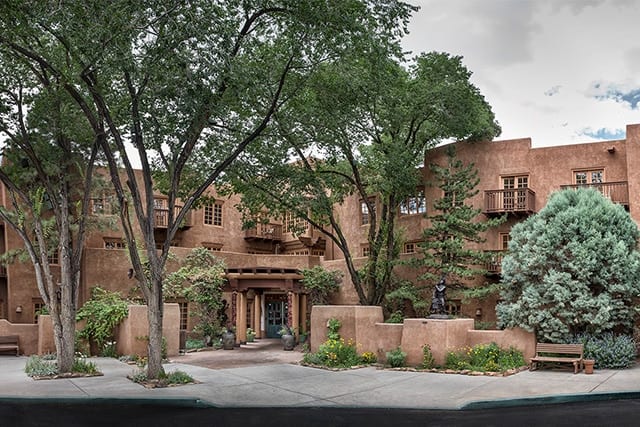
Step onto almost any street near the historic Santa Fe Plaza and the fragrance of piñon smoke mingles with the comforting sight of sun-baked, hand-built adobe walls. These thick earthen structures embody centuries-old traditional New Mexican building techniques.
Adobe continues to be used to build energy-efficient homes in Santa Fe to this day, blending heritage with modern comfort and sustainability.
If the allure of Santa Fe adobe homes has you dreaming of owning your own slice of authentic Southwestern architecture, the experts at Corcoran Plaza Properties are ready to guide you.
Corcoran Plaza Properties real-estate listings range from meticulously restored historic adobe homes in Santa Fe to contemporary Pueblo-style homes that fuse sustainable building materials with modern luxury.
ADOBE HISTORY
The word adobe comes from Spanish and Arabic origins, meaning “mud brick.” Adobe bricks blend earth, water, sand, clay, straw, and grass, shaped in wooden forms, compacted, leveled off by hand, and left to dry under the sun — a process perfectly suited to the Southwest’s arid climate. This method, which dates back to the eighth century B.C.E., results in durable adobe construction that naturally insulates against both heat and cold.
NEW MEXICO’S ICONIC ADOBE BUILDINGS
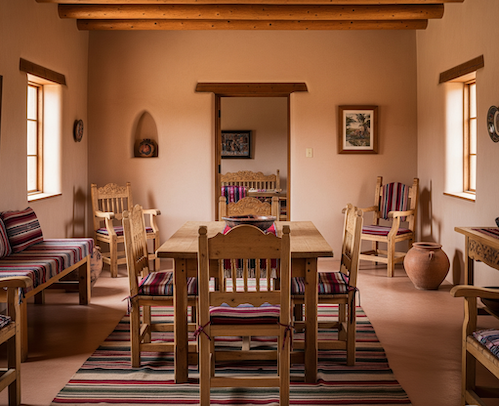
Adobe architectural design has evolved, but its core principles remain unchanged. The enduring appeal of Spanish adobe and Indigenous building methods is evident in the hand-built walls, vigas and latillas, and the organic shapes that define Northern New Mexico’s landscape.
Adobe in the Santa Fe Historic District
Wander the narrow lanes around the Santa Fe Plaza and you’ll see centuries of Spanish Colonial architecture blending with the creative Pueblo Revival style.
Centuries of Spanish Colonial architecture meet creative Pueblo Revival style in the narrow lanes around the plaza. Many homes here still boast original hand-built adobe walls, naturally keeping interiors cool during hot afternoons and warm during chilly high-desert nights.
Because demand is high and supply is limited, Santa Fe Historic District real estate values consistently outperform broader market averages. Corcoran Plaza Properties maintains an insider’s portfolio of adobe homes for sale in Santa Fe’s Eastside neighborhoods, the Canyon Road district, and hidden courtyard homes with expansive gardens and acreage tucked behind adobe walls along the quiet streets.
Corcoran Plaza Properties brokers are experts in identifying historic adobe homes in Santa Fe that offer intact nichos, original kiva fireplaces, exposed latillas, and the potential for modern electrical upgrades — maintaining your new home’s status as both a cultural landmark and an energy-efficient adobe abode.
Historic Adobe Buildings in New Mexico
Below, we’ll review just a few of the amazing historic adobe buildings in New Mexico.
San Miguel Chapel – Santa Fe
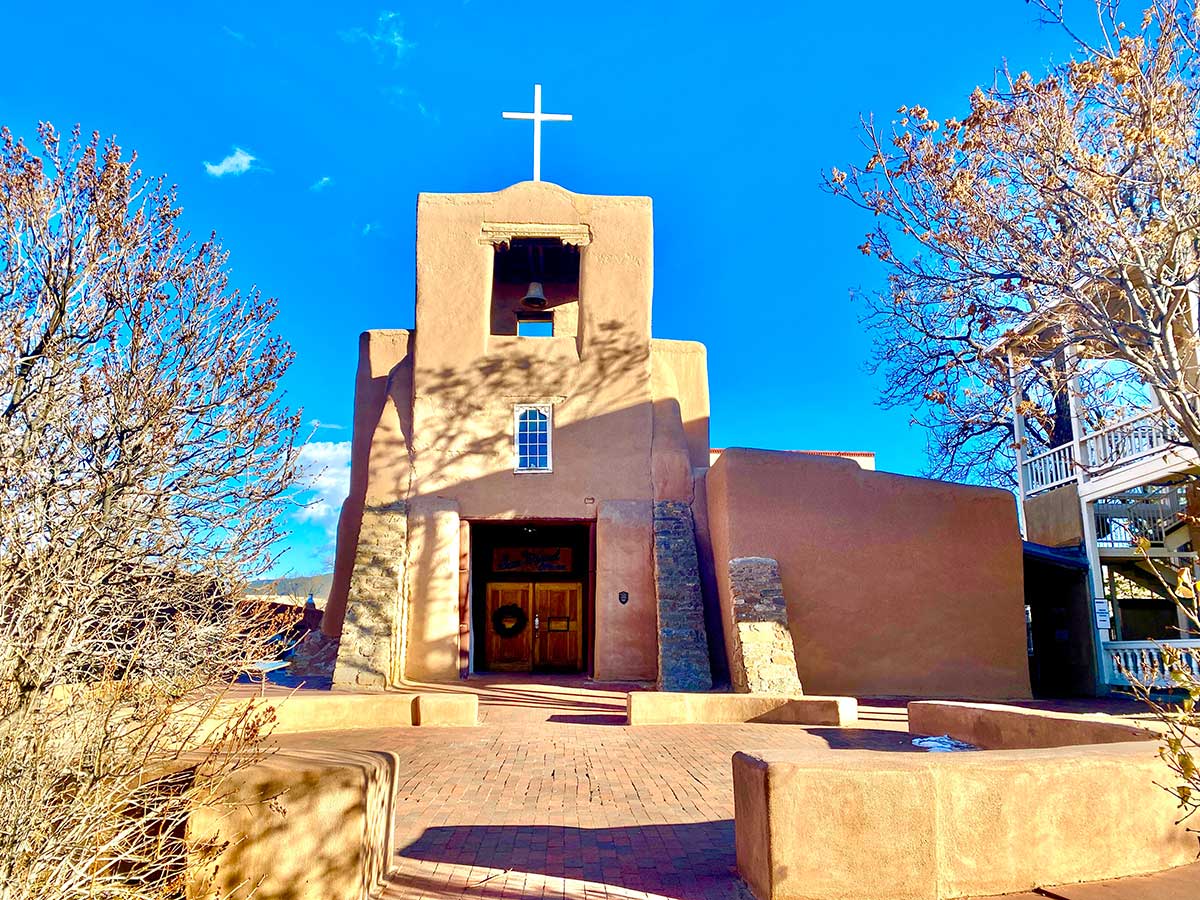
One of the oldest structures in the continental United States is the San Miguel Chapel in Santa Fe. The original adobe walls and altar were built by Spanish-allied Indians from Tlaxcala, Mexico, under the direction of Franciscan friars between 1620 and 1628.
Its adobe walls have endured centuries, thanks to ongoing volunteer maintenance and community support.
De Vargas Street House – Santa Fe
Dating to the early 1600s, the two-room De Vargas Street House, located in the Barrio de Analco Historic District, stands on pre-colonial Pueblo foundations, featuring “puddled” adobe, an Indigenous adobe technique predating the Spanish colonists’ mud bricks. Also called the “Oldest House,” this structure features hand-hewn vigas and thick adobe construction.
Exceeding two feet in some places, its adobe walls and foundation exemplify some of the best of durable adobe construction methods, blending Indigenous and European techniques.
Palace of the Governors – Santa Fe
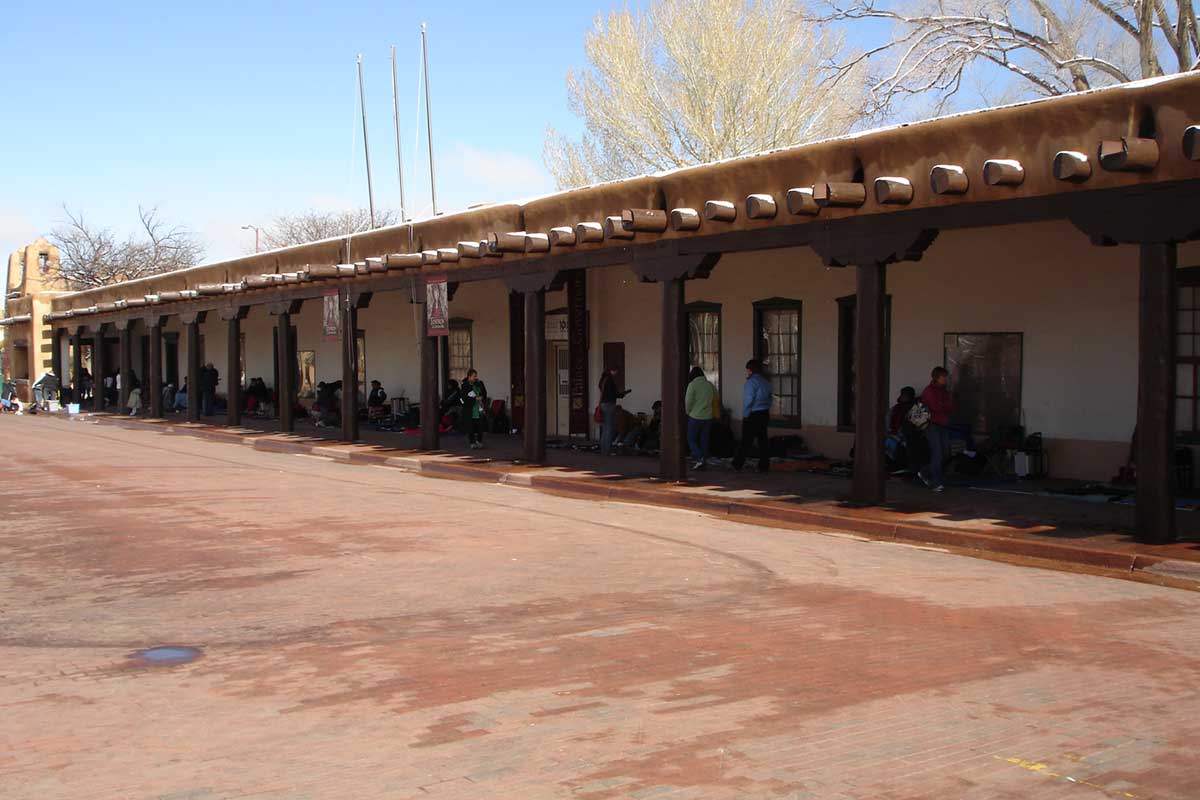
The Palace of the Governors, a National Historic Landmark, was built in 1610 and is the oldest continuously used public building constructed by European settlers in the continental United States. It stretches 400 feet along the plaza and is a testament to the endurance of mud-brick homes New Mexico style.
Along the north side of the plaza, artisans from the Native American Portal Artisans Program set up their beautiful jewelry and crafts daily beneath the 400-year-old Palace of the Governor’s deep shaded portal of hewn timber. Walk the same packed-earth floors that colonial governors, traders, and now, modern tourists and locals, have trod for more than four centuries.
San Felipe de Neri Church – Albuquerque
Construction of the original church of San Felipe de Neri in Albuquerque was started in 1706 and the church was rebuilt after suffering structural damage from an especially rainy summer in 1792. San Felipe de Neri was then built in the shape of a cross with adobe walls that are five feet thick. Except for a few changes to the ceiling, floor, and south entrance, the church remains as it was in 1793.
San Estévan del Rey Mission Church – Acoma Pueblo
Situated on the Acoma Pueblo, this mission is considered to be one of the first built in New Mexico and is a National Historic Landmark. It is a hybrid of Spanish Colonial and Puebloan architecture, and was built between 1629 and 1641. The roof is made up of about six inches of adobe, supported by ponderosa pine vigas. Its main adobe walls reach 35 feet high and seven feet thick at the base.
El Santuario de Chimayó – Chimayó
El Santuario (Spanish for “sanctuary”) de Chimayó is a small shrine and National Historic Landmark in the Sangre de Cristo Mountains in Chimayó, New Mexico. It was established in 1813 and has served as a place of worship for many generations. The church itself, two front towers with belfries, an adjoining enclosed garden along the Santa Cruz River, and its arched gate are all made of genuine adobe.
Taos Pueblo – Taos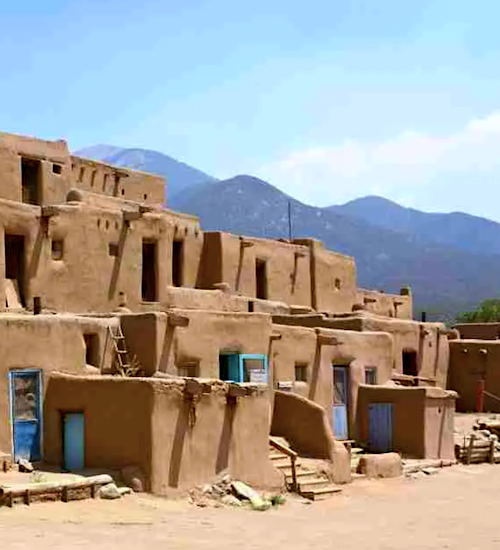
Also located within the Sangre de Cristo Mountain range is the Taos Pueblo. The multi-storied adobe buildings have been inhabited by Native Americans for more than 1,000 years and the pueblo remains active today. Its current fulltime residents welcome visitors, except when closed for community events and ceremonies. Its fabulous multi-storied adobe buildings inspired the Pueblo Revival style that defines much of New Mexico’s architecture today.
The Kit Carson House – Taos
Built in 1825, this single-story Spanish Colonial adobe home in central Taos has been restored to its original style and now serves as a museum, showcasing family artifacts and the enduring appeal of hand-built adobe walls.
Carson was a fur trapper and served as a guide on numerous United States Army excursions. His single-story home is of Spanish Colonial architecture and has been restored, where necessary, to match the original style as closely as possible.
A museum was later constructed around the home that is complete with a gift shop, bookstore, and a 20-minute informational video. There is also a guided tour of the home itself, which includes observing many personal family artifacts.
San José de Gracia Church – Las Trampas
Built circa 1760, this church features thick defensive adobe walls and exposed vigas. Its original wide-plank wooden floors, decorative interior, and adobe walls remain intact, continually preserved by the community, upholding the spirit of traditional New Mexican building techniques.
The church’s clerestory window in the nave casts light on the sanctuary and altar, which are otherwise lit by candles. It’s a truly one-of-a-kind-example of the melding of Spanish Colonial architecture with traditional Christian church structure, along with traditional New Mexican building techniques and Native spiritual traditions.
Old San Miguel Mission – Socorro
Originally established around 1626 and reconstructed after an Apache attack in 1680, Socorro’s Old San Miguel Mission embodies classic Spanish Colonial architecture, framed by massive adobe walls. Modern restorations use earth building methods to protect Socorro mission architecture against erosion, anchoring the town’s historic plaza.
The 1790s rebuild adopted a cruciform layout and timbered choir lofts, while 21st-century restorations use lime plaster and traditional earth-building methods to guard against the summer monsoon’s downpour erosions. The mission anchors the town’s historic plaza, reminding visitors of adobe’s spiritual and communal roles, reaching far across the Southwest.
Fort Union National Monument – Watrous
When originally built, Fort Union served mainly as a military defense post and supply depot. Home to the largest collection of 19th-century adobe structures in the country, Fort Union is preserved through annual applications of adobe plaster to protect the roofless buildings.
Old Mesilla Fortress Walls – Old Mesilla
The historic town of Old Mesilla and its centralized plaza offer a fortress of thick adobe walls that once protected residents from attacks. Mesilla is now home to art galleries, restaurants, museums, gift shops, and taverns.
Why Choose Adobe?
- Natural Insulation: Adobe’s thermal mass keeps homes cool in summer and warm in winter, making it the ultimate desert climate housing solution.
- Sustainability: Made from sustainable building materials, adobe is environmentally friendly and supports energy-efficient homes Santa Fe.
- Durability: Properly maintained, adobe buildings can last centuries, resisting fire, insects, and even bullets.
- Aesthetic Appeal: The organic curves, homes with vigas and latillas, and natural finishes create the unmistakable Santa Fe style.
Considerations
- Maintenance: Adobe requires regular care, such as mud plastering, to protect against wind and rain.
- Construction Time: Building with adobe can take longer than with conventional materials, and skilled craftsmen are increasingly rare.
Modern Upgrades: Retrofitting for modern amenities is possible, and many energy-efficient adobe homes now include solar panels, radiant heat, and advanced insulation.
Considerations
- Maintenance: Adobe requires regular care, such as mud plastering, to protect against wind and rain.
- Construction Time: Building with adobe can take longer than with conventional materials, and skilled craftsmen are increasingly rare.
- Modern Upgrades: Retrofitting for modern amenities is possible, and many energy-efficient adobe homes now include solar panels, radiant heat, and advanced insulation.
Find Your Dream Adobe Home in Santa Fe
Is your heart set on a sun-drenched casita with vigas and latillas? Torn between choosing a sprawling estate on the northern mesas or in the canyons of the Galisteo Basin, just outside of the city? Or perhaps, a downtown pied-à-terre within strolling distance of world-class galleries?
Adobe homes offer unparalleled character and comfort. They define that enigmatic aura of New Mexico luxury homes, using sustainable building materials, to complement and honor the heritage of the peoples and the landscapes of the high deserts of New Mexico.
To explore current properties, including adobe homes for sale, tap into the depth of local knowledge at Corcoran Plaza Properties — your trusted partners for navigating the unique Santa Fe real-estate market and your key to Santa Fe living!
Ready to live the Santa Fe style? Connect with seasoned brokers today and turn your adobe dream home into your home address.
STORY SPONSORED BY Corcoran Plaza Properties
VISIT THE WEBSITE
This article was posted by Jesse Williams