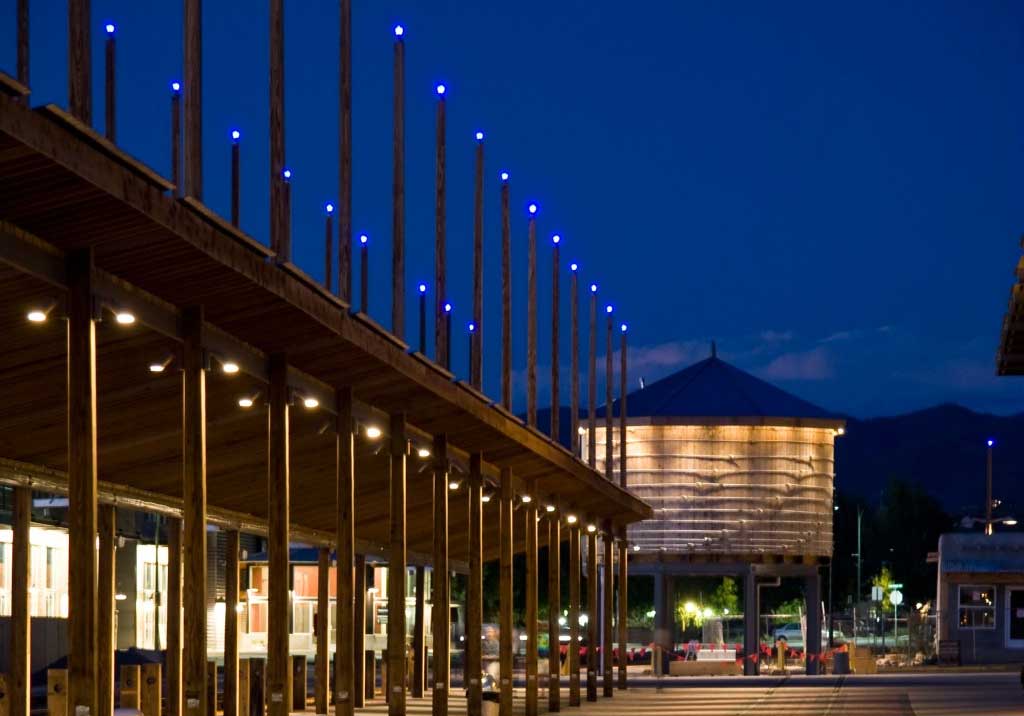
Las Vegas, New Mexico, offers visitors Wild West history, natural outdoor recreation, and Victorian architecture just 65 miles from Santa Fe. You may recognize this iconic town from the many movies and television shows it has played a role in, including Easy Rider and Longmire.
Not many communities in New Mexico can brag about having connections to President Theodore Roosevelt, philanthropist Andrew Carnegie, and restaurant pioneer Fred Harvey, but Las Vegas has ties to all three famed men.
Even before any of them arrived in Las Vegas, Spanish explorer Francisco Vazquez de Coronado crossed the Gallinas River in 1541, just a few steps away from the plaza.
There are plenty of things to do around Las Vegas, NM, including local hot springs, historic Santa Fe Trail sites, wildlife refuges, state parks, and more.
Historic Downtown Las Vegas, NM
Your visit to Las Vegas can begin at the city’s historic plaza, then follow some self-guided tours to explore more of the community.
Old Town Plaza, Las Vegas, New Mexico
Las Vegas, New Mexico, not to be confused with the younger yet larger city with the same name in Nevada, has its heart in the historic district’s plaza. The plaza was first laid out in 1835 as part of a Mexican land grant and was a stop on the Santa Fe Trail. In fact, for many years, Las Vegas was the largest city in New Mexico.
The Las Vegas Plaza today is an inviting place to stroll or relax, filled with mature trees, a bandstand, and benches.
Wild West
Outlaws like Jesse James, Billy the Kid, and “Doc” Holliday came through Las Vegas (Billy was jailed just off the plaza), giving the town a sense of lawlessness. In the 1880s, a vigilante committee used a windmill on the plaza of this wild west town to serve as a gallows.
Plaza Hotel
One of the most dominant buildings is the Plaza Hotel, which was built in 1882 in the Renaissance Revival style and topped with a pedimented baroque cornice. The hotel has been extensively renovated, but maintains its historic charm. You can stay at the hotel to step back in time, or drop in to the onsite restaurant and visit the gift shop.
Diverse Architecture
There are, of course, many other historic buildings around and near the plaza, including structures built in the Italianate, Greek Revival, Territorial, and California Mission Revival styles.
Adobe buildings were the first to be built, including the Maese House at 218 N. Plaza, which was constructed sometime before 1846. It was atop this one-story adobe building that General Stephen Watts Kearney of the American Army of the West stood to tell the populace that New Mexico was now part of the United States.
Las Vegas, NM Victorian Architecture District
The founding of Las Vegas, New Mexico, dates back to the mid-1830s when 29 people were given land grants from the Mexican government. They laid out the large plaza with streets radiating out like spokes from the center of the new town, building homes on the high ground above the Gallinas River. Homes during this period were built of adobe.
Statehood and the Railroad
In 1850, New Mexico became part of the United States after the signing of the Treaty of Guadalupe Hidalgo, prompting General Kearney’s visit. In 1879, the Atchison, Topeka & Santa Fe Railroad made Las Vegas a railroad town, which brought many European immigrants and East Coast Americans to the area seeking prosperity. This area became the Town of West Las Vegas.
From the time of the railroad until 1970, Las Vegas continued to be two communities, the old town based around the plaza and West Las Vegas, the new town to the east of the Gallinas River. West Las Vegas was built on the Eastern model of gridded streets.

Historic Buildings to Explore
This mixture of styles throughout what is now one city of Las Vegas makes it a fascinating place to explore architecture. Find Victorian homes along with every other architectural style employed in the U.S. between 1840 and 1960, and surely some newer styles as well.
The City of Las Vegas website offers descriptions of some of the 900 buildings in and around the city that are on the National Register of Historic Places, divided into five districts:
- Old Town, Las Vegas Plaza, and Bridge Street
- El Distrito de Las Escuelas
- Railroad Avenue, Lincoln Park, and Sixth Street
- Library Park Historic District
- New Mexico Highlands University Area and Historic Churches
The Castaneda Hotel: Historic Harvey House
Be sure to head to the railroad tracks for the visitor center and adjoining Amtrak station at 500 Railroad Avenue, and the next-door historic Castaneda Hotel, which was one of the famed Harvey Houses that served railroad passengers tasty hot meals and provided comfortable stays for overnight guests.
Stephen Fried described the Castaneda in his history of Fred Harvey, Appetite for America, this way: “The hotel was a spectacular U-shaped Mission Revival-style mansion with lush gardens and a main entrance that faced the tracks, not the town, so passengers would feel more welcome, more at home, the moment they got off the train.”
Travel by Train
Visitors can still arrive just this way: disembark from the Amtrak station next door and walk over to stay at the Castaneda. Today, the Castaneda has a new, local owner, and you can stay in one of the distinctive and comfortable rooms in the hotel. Stop by and ask if you can take a look around, even if you can’t stay the night there.
Rough Rider Reunion
The Castaneda has the distinction of being where a reunion took place with then New York Governor Theodore Roosevelt and his Rough Riders on June 24, 1899, on the one-year anniversary of the Battle of Las Gusaimas in Cuba during the Spanish-American War. About 100 veterans who had served under Roosevelt attended, and about 10,000 others joined in the festivities, which included fireworks, a parade, and speeches.
Museums and Cultural Attractions
City of Las Vegas Museum and Rough Rider Memorial Collection
Dig deeper into the history of both Las Vegas and its Rough Rider connection at the City of Las Vegas Museum and Rough Rider Memorial Collection at 727 Grand Avenue. The museum is open Monday through Friday from 9 a.m. to 4 p.m. You can learn more about the Rough Riders and the museum’s collection virtually through this YouTube video.
Although some artifacts at the museum date back to the 1300s, most items are from the mid-19th to the mid-20th century.
Carnegie Library Las Vegas, NM
Between 1883 and 1929, industrialist and philanthropist Andrew Carnegie invested some of his millions to fund the building of libraries in communities around the United States and beyond. In all, 2,509 Carnegie libraries were funded worldwide, with 1,689 built in the United States and 820 in countries like the UK, Ireland, and Canada.
Las Vegas, New Mexico, was one of those places selected for a Carnegie Library, and its library is one of the few still used for its original purpose. The Las Vegas Carnegie Library was built in 1903 in the Georgian Revival style, modeled after Thomas Jefferson’s Monticello. You can visit the library Monday through Friday from 8 a.m. to 5 p.m. and Saturdays from 8 a.m. to 2 p.m. at 500 National Avenue.
Santa Fe Trail Heritage Sites
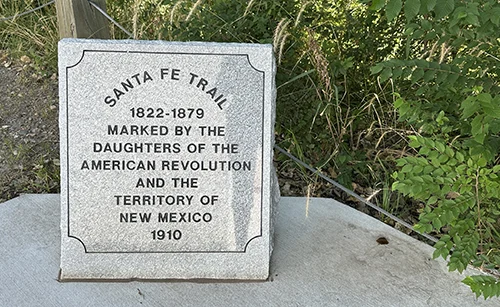
Santa Fe Trail Las Vegas, NM History
The Santa Fe Trail was an early commercial route connecting Missouri and Santa Fe. It was used by merchants to bring goods from the East to the Mexican territory of New Mexico and beyond. Trade was possible after Mexico was no longer controlled by Spain, and the Mexican government allowed merchants from the United States to bring goods into their territory.
From Santa Fe, El Camino Real de Tierra Adentro (The Royal Road of the Interior) continued to Mexico City, with Santa Fe as an important hub for both. The Old Spanish Trail took travelers west to California.

- 1821 – 1846: Trade from Missouri to Santa Fe and points south in Mexican territory.
- 1848: After the Mexican-American War and the Treaty of Guadalupe Hidalgo brought New Mexico into the United States, commercial traffic boomed. The U.S. Army used the route to bring troops and materials to new forts in the Southwest, and gold seekers heading to California also followed the Santa Fe Trail.
- 1880: The Atchison, Topeka, and Santa Fe Railroad built tracks to Santa Fe, ending the need for the wagon road.
Las Vegas was an important stop along the Santa Fe Trail, and you can explore the trail’s history here and at nearby locations. In some places you can even find wagon ruts.
- Las Vegas Plaza
- City of Las Vegas Museum and Rough Rider Memorial
- Santa Fe Trail Interpretive Center
- Pecos National Historical Site
- Fort Union National Monument, Watrous
Santa Fe Trail Interpretive Center
Learn more about the Santa Fe Trail’s connection to Las Vegas by visiting the Santa Fe Trail Interpretive Center. The center has historical displays, books, brochures, and original photos related to the Santa Fe Trail. It is operated by the Las Vegas Citizens’ Committee for Historic Preservation at 116 Bridge Street. Stop by Wednesday through Saturday from 10 a.m. to 3 p.m.
Fort Union National Monument (28 miles)
Fort Union is a “must-visit” destination for history and Civil War buffs along with those wanting to learn more about life on the frontier in the mid-to-late 1800s. The fort was active from 1851 to 1891 and was the largest military fort in the region. Now, the adobe walls are melting back into the earth, leaving behind a skeleton of their former strength.
The fort is just 28 miles from Las Vegas and 94 miles from Santa Fe, making it an easy stop between the two cities. Take exit 366 at Watrous and then travel 8 miles on NM Highway 161 to reach the fort.
Read all about Fort Union.
Natural Areas and State Parks Near Las Vegas, NM
Storrie Lake State Park
If you’re looking to camp or go fishing while you’re visiting Las Vegas, Storrie Lake State Park is only about five miles away on Highway 518 at Mile Marker 3.5. The park gates are open from 7 a.m. to 5 p.m. October through March and 5 a.m. – 9 p.m. April through September. Day use and camping fees apply: make camping reservations on ReserveAmerica.com.
This state park offers:
- 45 developed campsites, 22 with water and electric hookups
- Restrooms with vault toilets and showers
- RV dump station
- Boat dock and boat ramp: motorized and non-motorized boating are allowed
- Fishing for Rainbow Trout, Largemouth Bass, Channel Catfish, Common Carp, and Black Crappie.
- Birding: eBird reports for the park show more than 200 species spotted.
- Swimming, volleyball, horseshoes, picnicking, and a playground
Villanueva State Park (35 miles south)
Villanueva State Park is a riverside destination 35 miles from Las Vegas and 59 miles from Santa Fe. It was established as a state park in 1967 and offers campsites shaded by large cottonwood trees nestled along the Pecos River, not far from the historic village of Villanueva. From I-25, take NM Highway 3 south to Dodge Drive to Villanueva State Park. From Las Vegas, it takes about 45 minutes to reach the park.
- 36 developed campsites, 12 with electricity; water is available in the campground. At the time of writing, the dump station was closed.
- Equestrian camping at campsite three
- Restrooms with water, showers, and vault toilets
- Canoeing, kayaking, and swimming
- 2.9 miles of hiking trails
- Fishing for Rainbow Trout that are stocked in the winter and catfish in the summer. One fly fisherman suggested that when winter fishing for trout, “Your best bet is nymphing deep with small flies and a light tippet.”
- Birding: 158 species of birds have been reported on eBird
- Picnic areas, visitor center, and group picnic and camping areas
Morphy Lake State Park (30 miles north)
Looking for a quieter place to camp? Try Morphy Lake State Park up in the Sangre de Cristo Mountains near Mora at an elevation of almost 8,000 feet. It’s popular for Rainbow Trout fishing and canoeing, and all the campsites are non-reservation. It’s best for tent camping or small RVs, with a size limit of 18 feet. Note that the park is closed in winter. The park is about 45 minutes north of Las Vegas along NM Highway 518, then left onto NM Highway 94 to Morphy Lake Road.
- 26 developed non-reservation campsites: no water, electric, or dump station
- Boat ramp for on-motorized boating
- Fishing for Rainbow Trout
- Birding: While only 78 species have been reported on eBird, it may be due to its isolated location more than the lack of bird species. See what you can find!
- Picnicking and day-use activities
Hot Springs and Natural Attractions
Montezuma Hot Springs, NM (5 miles)
Here’s a different place to find a hot spring: on property owned by the United World College! The hot spring location is leased to the nonprofit Friends of Montezuma Hot Springs, whose purpose is to protect the springs and keep them “open, safe, and free for the community and guests.” There are strict rules for use of the springs and while it is free, donations are welcome.
The grouping of 20 to 30 hot springs is available for soaking from 6 a.m. to 10 p.m. daily. Water temperatures vary from 94ºF to 120ºF. Bathing suits are required.
Montezuma Hot Springs Development
The first development at the springs was an adobe structure built by the U.S. Army as a field hospital, which later became a hotel called The Adobe, which attracted the likes of “Doc” Holliday seeking a cure for tuberculosis.
In 1879, the Hot Springs Hotel was built nearby with two bathhouses. It was purchased by the Santa Fe Railroad in 1880, and in 1882, a six-mile rail line was extended to the hotel. Development continued with the construction of the Montezuma Hotel, operated by the innovative Fred Harvey, with 270 steam-heated rooms bright with the state’s first electric lighting.
Hotel Opening and Iterations
The Montezuma opened with a flourish on April 16, 1882, with the train pulling up to the hotel. Stephen Fried describes it this way in Appetite for America, “When the guests arrived at the new Montezuma hotel depot, they were met by a flock of bellmen who whisked away their bags, leaving them to stroll leisurely across the Gallinas River footbridge and along a small path from which the hotel was barely visible for the trees. Then, suddenly, the massive 270-room, four-story wooden structure loomed on their left — and when they were done staring, a turn to the right revealed a broad, lush park with fountains, footpaths, lawn tennis courts, archery ranges, even a miniature zoo.”
The first Montezuma hotel burned to the ground in 1884. The Santa Fe Railroad built a grander hotel, which also burned, within four months of opening. The third and final version of the hotel was called the Phoenix Hotel, but often still dubbed the Montezuma. It served many purposes after being closed as a hotel in 1903.
Montezuma Castle and the surrounding 100 acres were purchased by philanthropist Armand Hammer to be used as the United World College. Millions were spent to restore the building, which has won awards as one of the great historical restorations in the United States. It is open for tours led by students at certain times of the year.
Dwan Light Sanctuary
Speaking of United World College, there’s a special place to visit on the campus. The Dwan Light Sanctuary is surrounded by a pine forest and was designed by Virginia Dwan, Charles Ross, and Laban Wingert, and opened in 1996 to serve as a refuge from the “pace, conflicts, and anxieties of daily living.”
The 36-foot diameter, 23-foot tall circular building has six large prisms to capture light rays from sunrise to sunset. There are 12 additional prisms in the roof and a third apse that frames trees and the sky.
While the United World Campus is closed to the public except when offering student-led tours, visitors can stop by the welcome center and ask for an access key to visit the Dwan Light Sanctuary. Donations are accepted.

Blue Hole, NM (65 miles south)
If you want to explore a fascinating natural phenomenon that’s a bit farther afield, take a day trip to Santa Rosa, New Mexico, to experience the Blue Hole. The Blue Hole is the result of an artesian well filling a collapsed cavern called a cenote. It is 80 feet wide at the surface, but if you dive down more than 80 feet, the bottom is 130 feet wide. Deep underground, it connects to six sister lakes. Read all about the Blue Hole.
Wilderness and Outdoor Recreation
Pecos Wilderness Access Points
The Pecos Wilderness is within the Santa Fe National Forest and offers backpackers, hikers, mountain bikers, equestrians, and anglers a wide range of adventures.
A list of 46 trails in the Pecos–Las Vegas Ranger District includes the Baldy Trail, Jack’s Creek Trail, and Glorieta Baldy. The Forest Service website includes the trail name and number, status, length, uses, and location. Some of the trails within this district were burned in the 2022 Hermits Peak/Calf Canyon Fire, and are more difficult to navigate.
Be aware that Forest Service locations, such as picnic sites, fishing areas, and trailheads, may require a recreation fee. If you have an Interagency Pass, you’re covered for most day-use fees and get a discount on camping. There is also a New Mexico Enchantment Pass for the five National Forests within the state. Check each location’s website or onsite signage for details.
Anglers who are willing to take a hike to cast a line may want to try these trails recommended by AllTrails users, from the moderate, 7.2-mile out-and-back Mora Flats Trail to the hard 27.1-mile Rio Santa Barbara West, Truchas Lakes, Skyline, and Middle Fork Loop.
Entertainment and Events
Fort Union Drive-In Theater
Back in the day, going to the drive-in movies was a popular activity, but there are very few of them left. Fortunately, Las Vegas, New Mexico, is home to one of them!
The Fort Union Drive-In Theater screens double features Friday and Saturday nights with gates opening at 6 p.m. There’s a concession stand to grab your favorite movie eats, too, including some special items like pizza, nachos, Frito pie, chile dogs, and green chile stew.
Entry is $30 per carload, so bring your friends for a classic drive-in movie experience. You can bring folding chairs to enjoy a warm summer evening or blankets to cozy up in the car. The Fort Union Drive-In Theater closes during winter, so check the theater’s current schedule.
Las Vegas, NM Fiestas
Las Vegas, NM, has a variety of annual events and celebrations. Check the city’s tourism website for more events as they are scheduled. Here are some you can explore:
- Las Vegas Arts Festival in the spring
- Friday al Fresco free music nights on the plaza from May through August
- Christmas Craft Fair at Abe Montoya Recreation Center
Las Vegas Fourth of July Celebrations
The Fourth of July is celebrated in a big way in Las Vegas, New Mexico! Residents and visitors alike can enjoy four days and nights of live music, a parade, fun runs, a Mariachi Mass, a Reina Coronation Mass, food trucks, and, of course, fireworks on July 4, during the annual Fourth of July Weekend Fiestas de Las Vegas. Plaza Park is the place to be for this popular July 4 celebration.
Day Trips from Las Vegas, New Mexico
How Far is Las Vegas, NM, from Santa Fe?
Las Vegas, NM, makes the perfect day trip from Santa Fe. It’s about 65 miles on I-25 all the way to Las Vegas. If you’re staying in Las Vegas, there are even more day trips you can enjoy.
Pecos National Historical Park
Along the one-hour drive from Santa Fe, you’ll see exits for Pecos National Historical Park, so include that in your day trip itinerary.
Stop by Pecos National Historical Park to explore history from the days of the Paleo Indians to the Mexican period’s Santa Fe Trail (which passes through the park), an American Civil War battlefield, and even a home lived in by Hollywood actors E.E. “Buddy” Fogelson and his wife Greer Garson, Forked Lightning Ranch.
There are three trails to hike, including a moderately strenuous 2.25-mile round-trip loop with a 500-foot elevation change that allows you to see the site of one of the Civil War’s pivotal battles, the Glorieta Battlefield. Other trails include the 3.8-mile roundtrip South Pasture Loop and the 1.25-mile roundtrip Ancestral Sites Trail, which takes you to the ancestral sites of the Pecos Pueblo and the mission church.
Pecos National Historical Park is open daily except Thanksgiving, Christmas, and New Years Day. The Ancestral Sites Trail and the Glorieta Battlefield Trail are open daily from 8 a.m. to 4:30 p.m. Hours vary from season to season for the Forked Lightning Ranch, South Pasture Loop Trail, and Trading Post exhibits. The visitor center and Western National Park Association Store open at 8:30 a.m. from early May through early November, and 9 a.m. for winter hours. They close at 4 p.m. each day.
There is no fee to enter the park. Check the park’s calendar for guided tours that may be available during your visit.
Las Vegas National Wildlife Refuge (6 miles)

Nature lovers will want to make a day trip to the Las Vegas National Wildlife Refuge, just over six miles from downtown. The visitor center, where you can learn more about the refuge and get your bearings, is currently only open Tuesdays and Thursdays from 9 a.m. to 3 p.m.
However, even when the visitor center is closed, you can enjoy these activities and more:
- Auto loop: Drive the eight-mile asphalt and dirt auto tour along Country Road 22 and Highway 281. Note that although the loop is open year-round, some parts of CR 22C may be difficult to drive after heavy rain. Check the refuge map for more information.
- Birding: Of course, a wildlife refuge is a great place to spot birds and other wildlife. There are multiple eBird reporting locations at the refuge, but the largest list for the refuge shows 295 species reported. Fall and spring migration are excellent times to look for migratory waterfowl as they move north or south. Check the Crane Lake Overlook, Melton Pond Overlook, and other areas with standing water.
- Biking: Visitors may also experience the auto tour loop on their bicycles. Note trailhat CR 22C is gravel.
- Hiking: There are two hiking trails on the refuge that are open from sunrise to sunset. The Meadowlark Nature Trail is a short trail near the visitor center, and the Gallinas Nature Trail is longer on a mowed dirt surface with some rocky sections.
- Hunting: Goose hunting is permitted on the Ag Field West and Ag Field East on some Thursdays in November and December. Check with the refuge for details.
From Interstate 25, take exit 345 and then turn east on State Highway 104 for 1.5 miles. Turn south on State Highway 281 for about four miles and follow the signs to the refuge headquarters.
The latitude/longitude for the refuge’s headquarters is 35.508282, -105.167123.
There is no fee to visit the refuge. Vault toilets are available at the headquarters parking lot and at the Crane Lake overlook less than a mile south on Highway 281.
Film and Movie History

New Mexico is a popular place for filmmakers. Film buffs will find themselves drawn to Las Vegas, NM, to track down some of the many locations in and near the city that have been portrayed on film and television. The Old West character of the plaza and dramatic scenery keep film producers coming back to Las Vegas.
One easy “Easter egg” to find is Sheriff Walt Longmire’s office door on the historic plaza. Despite the end of the popular television series, the sheriff’s office still has a presence for the sharp-eyed visitor. (Hint: Check the block across from the Plaza Hotel.)
Which Movies Were Filmed in Las Vegas, NM?
Here are some of the films that used Las Vegas, New Mexico, as a location.
- Easy Rider (1969): Starred Peter Fonda, Dennis Hopper, Jack Nicholson, Karen Black, and Toni Basil. Filming locations included the plaza and Bridge Street where the “parade without a permit” scene took place.
- Convoy (1978): Starred Kris Kristofferson and Ali MacGraw. The truck convoy drove around the Las Vegas Plaza. Film locations also included White Sands National Park.
- Red Dawn (1984): Starred Patrick Swayze, Jennifer Gray, and Charlie Sheen. Filming locations included the plaza, Memorial Middle School, and Lincoln Park. The “Calumet Says Howdy” mural was created for the film, setting the scene for Las Vegas standing in for the fictional town of Calumet, Colorado.
- Speechless (1994): Starring Geena Davis and Michael Keaton. A key filming location was the Castaneda Hotel.
- All the Pretty Horses (2000): Starred Matt Damon, Penélope Cruz, and Henry Thomas.
- The Astronaut Farmer (2006): Starring Billy Bob Thornton, Virginia Madsen, Bruce Dern, and Max Thieriot. Filmed at the plaza, the Dairy Queen on Columbia Avenue, and the Farmer Ranch, as well as landscapes around Las Vegas.
- No Country for Old Men (2007): Starring Tommy Lee Jones, Javier Bardem, and Josh Brolin. Locations included the Regal Motel (now the Motel 6) and the Popular Dry Goods store.
Plan Your Visit to Las Vegas, NM
Best Times to Visit and Weather
When’s the best time to visit Las Vegas, New Mexico? Let’s consider some weather factors.
Spring and fall have mild temperatures, but can be windy. Summer brings monsoon rains, peaking in early August. The hottest month in Las Vegas tends to be July with an average high of 83ºF. Fortunately, the highs rarely go above 90ºF in Las Vegas thanks to its elevation of 6,441 feet.
The coldest months are December and January, with winter highs averaging 46ºF and lows averaging 24ºF. It can snow in Las Vegas in winter as well, usually starting in November through early April. December has the most snow, with an average of 2.4 inches.
One weather website computed desirable vacation factors like sunny, rainless days with moderate temperatures and determined that early June to early September are the best times to visit Las Vegas, New Mexico. Prime season peaks in the first week of July, which is perfect for visiting during the Fourth of July Fiesta.
Where to Stay Near Las Vegas, NM
To make your visit special, you may want to stay at the Plaza Hotel or the Castenada, the city’s historic venues. There are plenty of other chain hotels as well as rental properties you can try, including in the historic downtown area. You can also enjoy camping at one of the nearby state parks.
If you’re planning to visit during the Fourth of July festivities and want to stay at the Plaza Hotel, right at the heart of all the action, be sure to book early.

Getting Around Las Vegas, NM
The older section of Las Vegas, New Mexico, is quite walkable. Park by the plaza, walk down Bridge Street, and perhaps take a stroll through Gallinas River Park. Bridge Street takes you to one of Las Vegas’s other institutes of higher learning, New Mexico Highlands University.
Follow the Historic Walking Tours to visit the various districts we discussed around this historic city. Las Vegas also has a number of murals to explore, including the Calumet Cowgirl created for the movie Red Dawn.
If you’re not taking a walking tour, your best bet for getting around is by car or even bicycle.
Frequently asked questions
What is Las Vegas, NM known for?
Las Vegas bills itself as a place where “landmarks, legends, and lores” come to life. Las Vegas was an important stop on the Santa Fe Trail, attracted notorious outlaws, was the location of two Harvey House hotels, and has more than 900 buildings on the National Register of Historic Places in five historic districts. Las Vegas has been used as a location for many films seeking a western town vibe.
How far is Las Vegas, NM from Santa Fe?
Las Vegas, New Mexico, is only 65 miles from Santa Fe, traveling east on Interstate 25. It’s an easy drive for a day trip or a weekend getaway.
What to do in Las Vegas, NM in one day?
If you only have one day in Las Vegas, start at the plaza in the downtown area and wander through the Plaza Hotel, antique shops, find Walt Longmire’s office door, and then explore the historic districts. Head to the Castenada Hotel, a former Harvey House.
Are there walking tours in Las Vegas, NM?
Yes, there are walking tours in Las Vegas. There is a mural tour plus tours of five historic districts showcasing Victorian homes and many other styles.
Is Las Vegas, NM on the National Register of Historic Places?
More than 900 buildings in Las Vegas are on the National Register of Historic Places.
Check out Las Vegas, NM
Las Vegas, New Mexico, offers visitors an authentic taste of the American West with well-preserved Victorian architecture, rich Santa Fe Trail history, and easy access to natural recreation areas. Plan at least two days to fully explore the historic downtown, nearby hot springs, and state parks that make this Northern New Mexico destination unique. There are plenty of things to do around Las Vegas, New Mexico!
This article was posted by Jess