La Castaneda, in Las Vegas, NM, built in the Mission Revival style, opened in 1898, and hosted Teddy Roosevelt’s first reunion of his Spanish-American War Rough Rider troops the following year. The hotel also served as a location for the film “Red Dawn.” The couple is considering restoring La Castenada, and hopefully the new hotel will include a restaurant that matches the splendor and elegance of the Harvey House dining room,where the menu included filet of sole with cole slaw, jelly omelets with potatoes, chicken salad plates, and sandwiches made of fried eggs, pressed ham or peanut butter and jelly.
Harvey’s restaurant empire spanned New Mexico, with Harvey Houses serving up sumptuous feasts to weary travelers at La Fonda in Santa Fe, El Ortiz in Lamy, El Alvador in Albuquerque, El Navajo Hotel in Gallup and Las Chavez in Vaughn. The food was fresh, carried in on new refrigerator rail cars. A dairy in Las Vegas provided fresh milk. The food was always reasonable and portions generous. Prices were affordable, from breakfast for 50 cents that included cereal or fruit, steak and eggs, hash browns and a stack of six pancakes drenched in butter and maple syrup, followed by apple pie and coffee. Dinners were 75 cents, and featured wild game, Cornish game hens and other meat and poultry.
Like restaurateurs today, Harvey featured locally sourced ingredients on his menu, which included dishes that were popular in the region of each restaurant. In Santa Fe, for example, La Fonda during the 1920s and 1930s offered diners caviar, grilled and sautéed fish, steaks and lamb chops along with a Mexican plate with taco, tamale, enchilada, salsa and a fried egg and the popular pain perdu, or Santa Fe French toast. Other items included French fried shrimp with tartar sauce, shirred eggs with homemade sausages, roast larded loin of beef with mushroom sauce and roast spring chicken with giblet gravy and corn on the cob. Dessert, choices included pound cake, pineapple fritter with brandy sauce or cream cheese and guava jelly.
A 1928 Thanksgiving Day menu served at El Alvador in Albuquerque included Blue Point Cocktail, lobster en cassolette, filet mignon Nicoise, braised sweetbreads with truffles, roast young turkey with chestnut dressing and cranberry sauce, roast prime ribs of beef au jus, hot or cold mince pie, English plum pudding, nesselrode ice cream and fruit cake.
The Alvarado’s luncheon menu from 1929 offered clam chowder, fresh shrimp cocktail, Blue Points on the half shell, baked oysters a l’Anciennce, oyster stew, creamed shrimp Newburg on toast, jumbo frog legs au buerre noir, broiled lobster, breast of guinea hen, a cold buffet of meats, cheese and salads, and frozen éclairs, baked apples, blanc mange and other desserts.
The Harvey House hotels were famous for their elegance, but none more so than the Alvarado in Albuquerque, which opened in 1902. Built in the Spanish Mission style, the hotel featured long porches, shady courtyards and high arches. It offered 75 guest rooms, a club, parlors, a barbershop, reading and dining rooms and a connection to the Santa Fe Depot through a 200-foot arcade.
The Super Chief, which stopped at the Alvarado daily had a dining car staffed by Harvey House employees. The 36-seat dining cars had a lounge car with bar service and a waiting area. Meals on railroad cars were served on fine china and Irish linen. Often men were required to wear a coat and tie. The Superchief’s menu included caviar, cold salads, grilled and sautéed fish, sirloin, filet mignon and lamb chops. One of the Superchief’s most popular signature dish was pain perdu, or Santa Fe French toast, made with heavy cream and confectioner’s sugar.
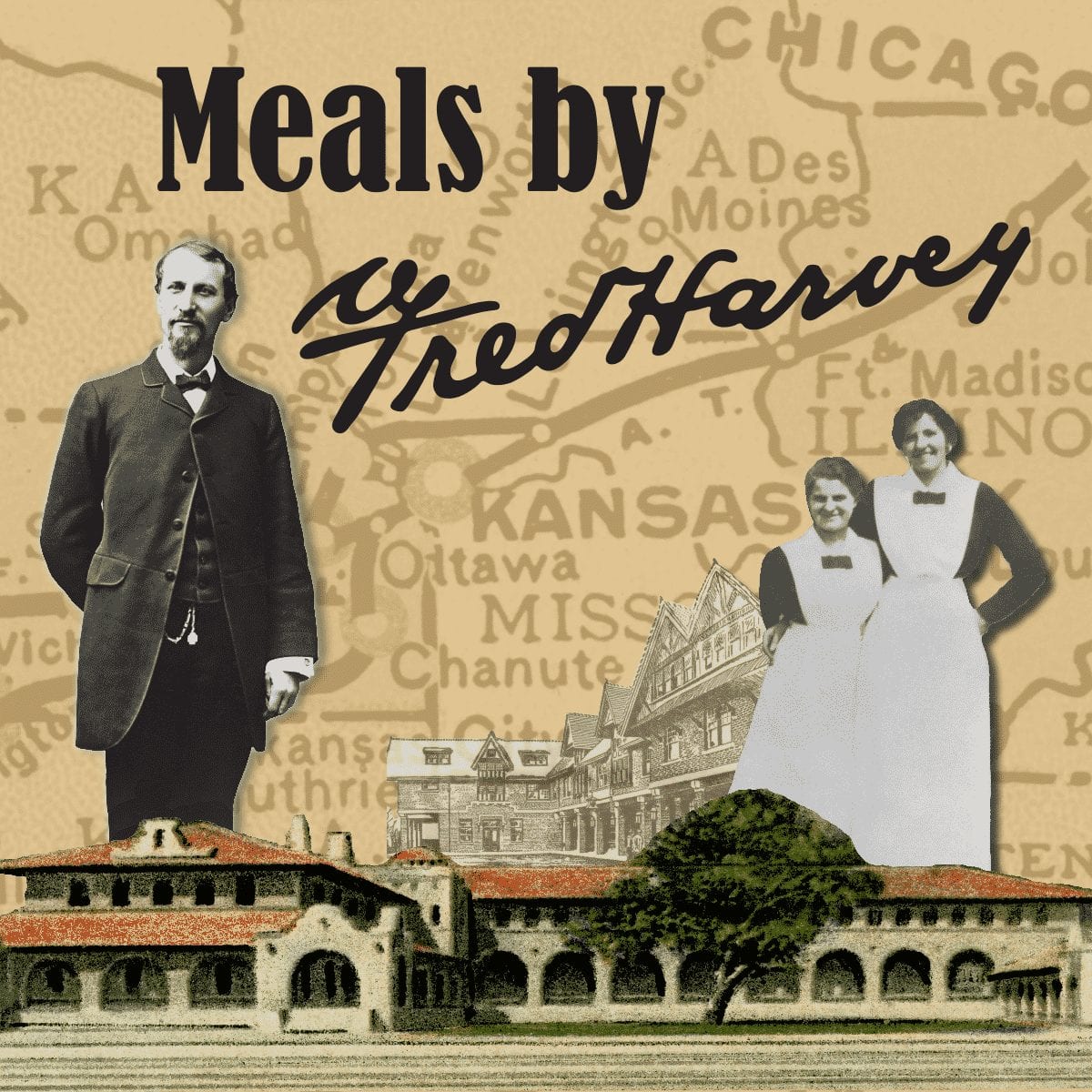
The Harvey House legacy is rich in both legend and fact. Harvey’s restaurant chain lay the ground for the fast food restaurant chains that operate around the glove. His approach to fine dining—linen tablecloths, well dressed staff—continues to influence the restaurant industry today. Even the famous American “blue plate special” is credited to the Harvey House practice of serving a daily, low-price special on china with a blue pattern.
Nothing lasts forever, and so the Harvey House empire eventually fell. The opening of Route 66 in the 1950s was partly responsible for the demise of the Harvey chain, along with affordable cars and improved roads, which led to a drastic decrease in the number of railroad passengers. Trucking also eroded the railroad’s role as a freight shipper, leading to more of a decline in the railroad industry.
Fred Harvey died in 1901 and, according to legend, his last words were: “Don’t cut the ham too thin.”
This article was posted by Jesse Williams